
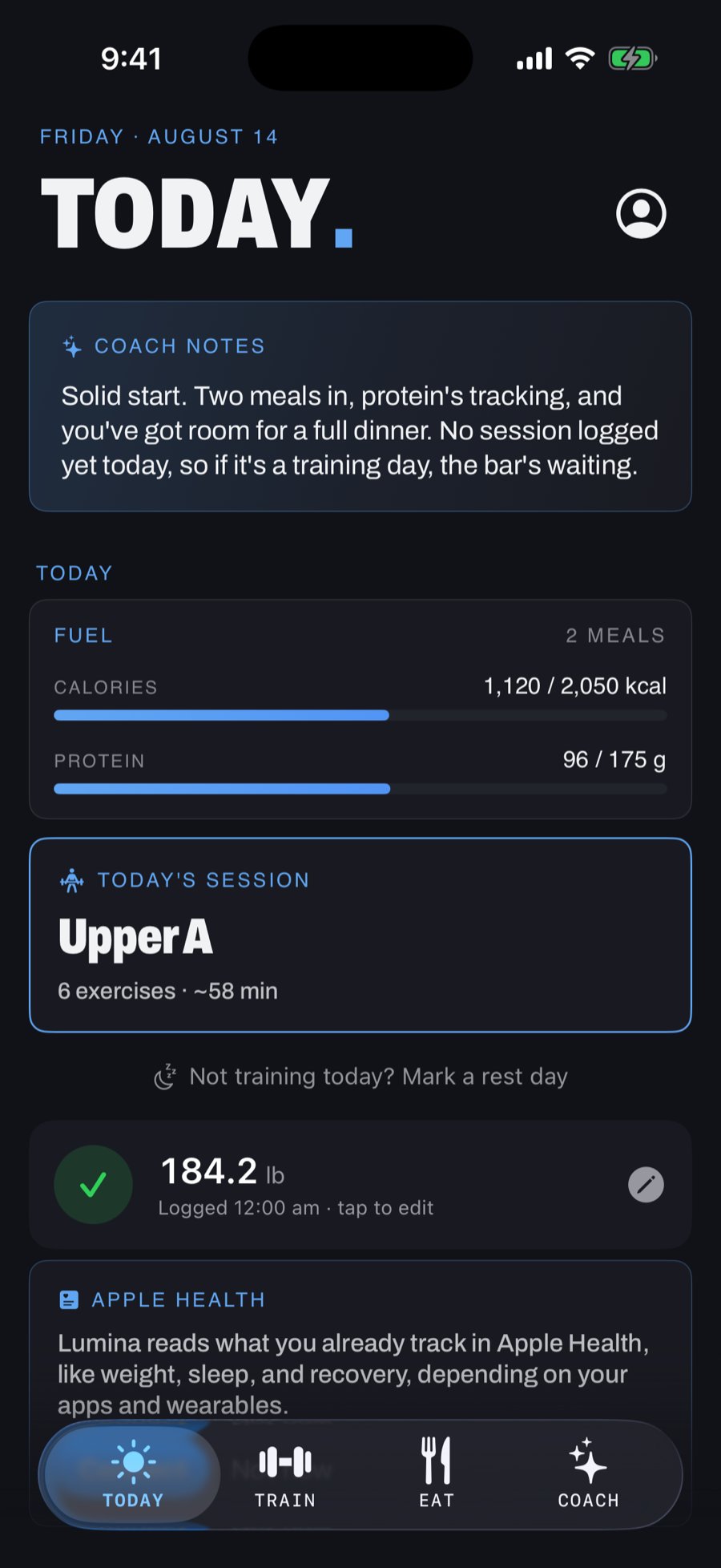
The plan keeps moving forward, even when life doesn't.
Nobody quits on purpose.
You stop for three reasons, and none of them are willpower.
- Life gets in the way. A trip, a bad week, a tweaked knee, and the plan you paid for is suddenly wrong.
- Nothing notices you stopped. A tracker waits to be opened. It will wait forever.
- Getting an answer is work. Even with a chatbot, you are typing out your weight, your program and last week's numbers before it can tell you anything useful.
You are not doing this on your own.
Ask Lumina why your protein target moved, whether to push through a bad session, what to do about a lift that has stalled for a month. It answers from your training history and your own numbers rather than general advice, and it remembers what you decided last time.
It writes your whole training program.
Tell it your goal, your equipment and the days you can train. You get weeks of sessions with the sets, reps and weights already filled in. Miss a Tuesday or go away for a week, and it reshapes around that instead of quietly going stale.
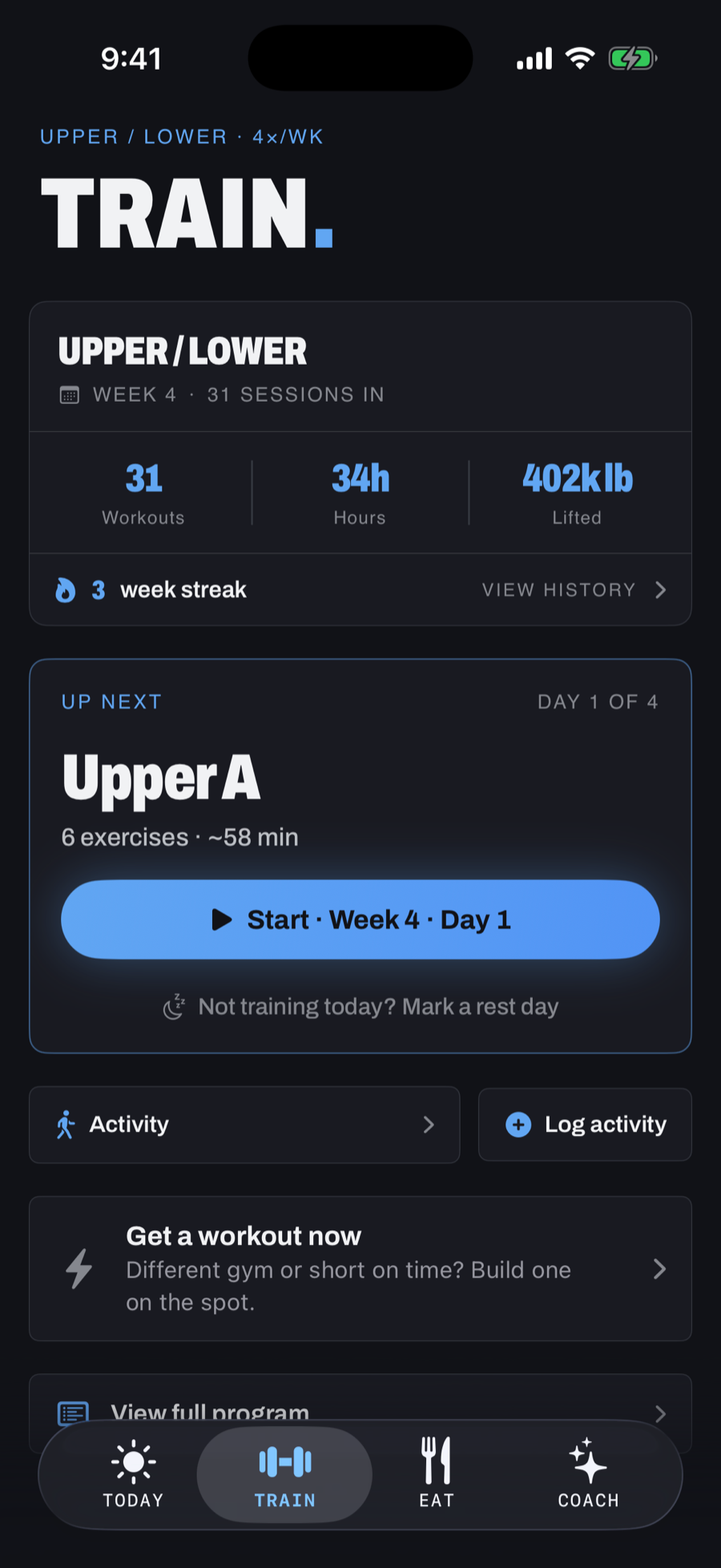
It speaks first.
Lumina writes you a note in the morning about the day in front of you, and says something when the week goes quiet. You are never the one who has to remember to check in, which is what being paid attention to actually feels like.
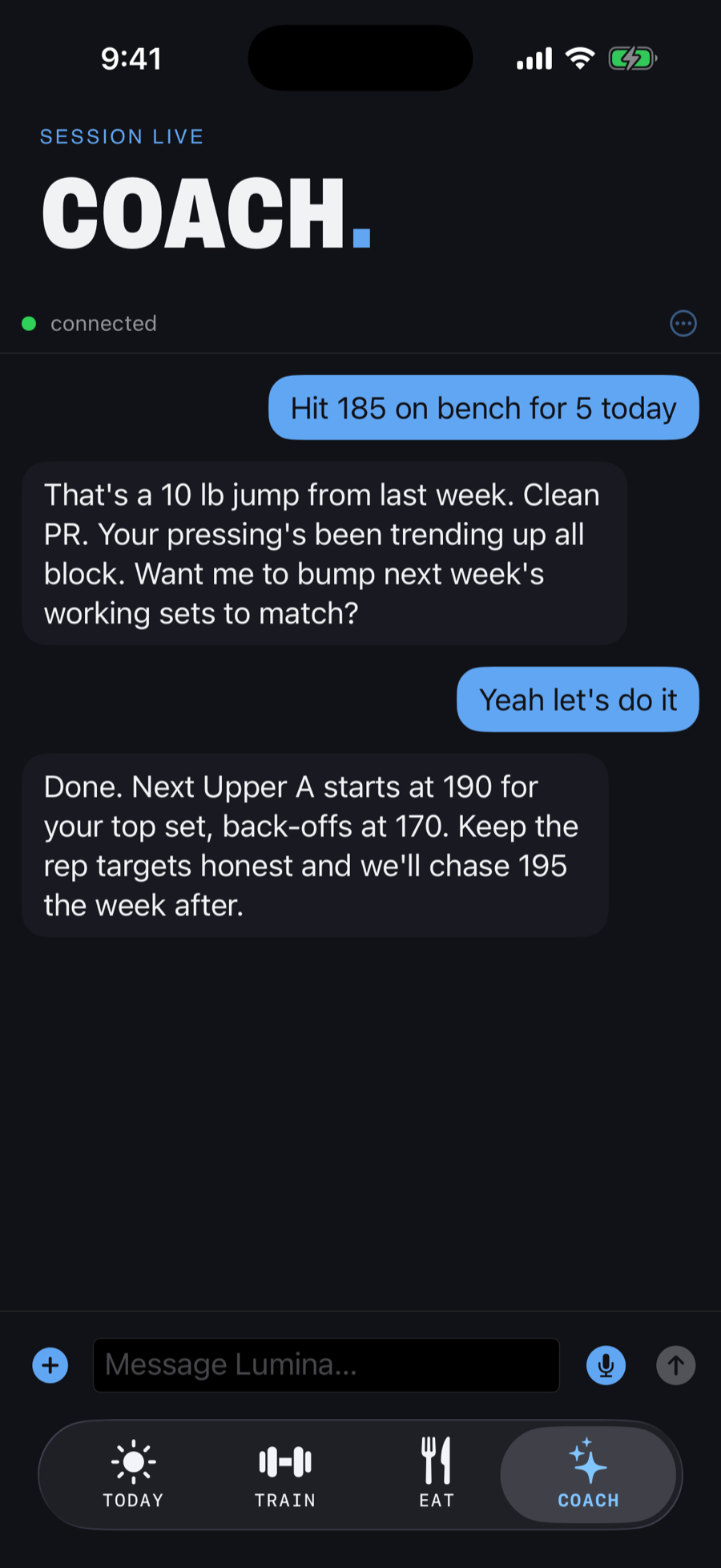
You never have to bring it up to speed.
Tell it you benched 185 for five. It already knows that is ten pounds up on last week, so the reply is about what to load on Tuesday.
The easiest way to keep track of what you eat.
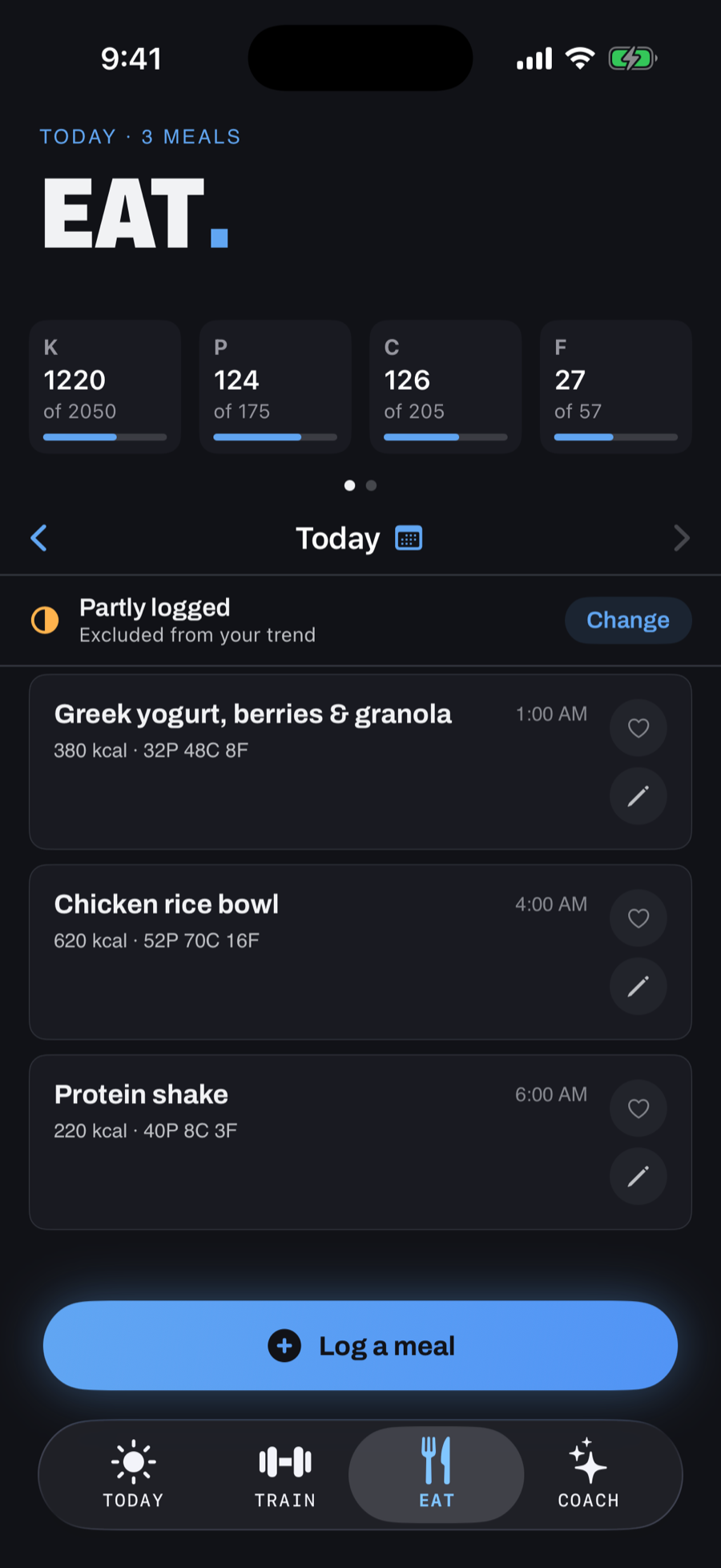
Say what you ate, or photograph it. Lumina works out the macros and asks when it cannot tell. Nothing you cooked has a barcode anyway.
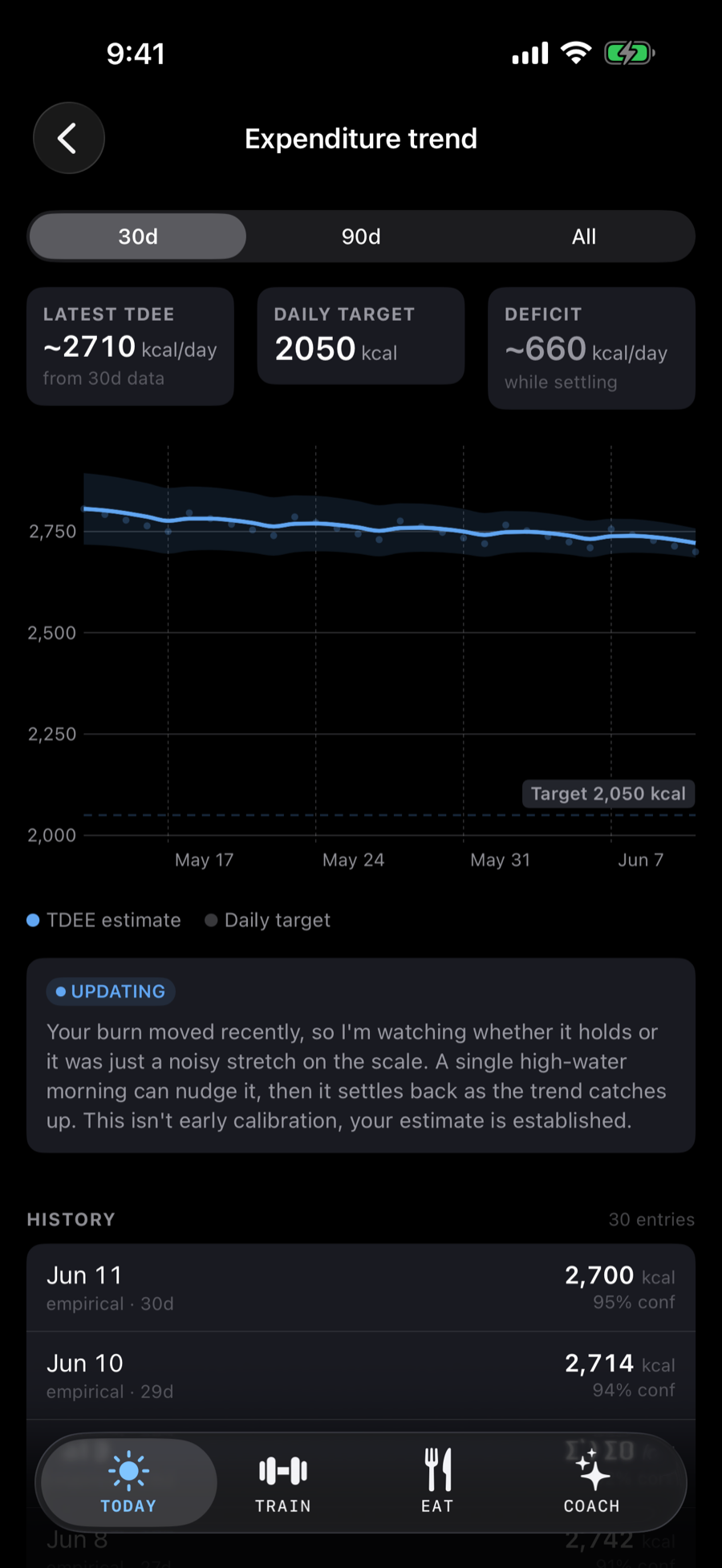
Your targets stop being a guess.
Day one, your target is a formula, because that is all anyone has. Two weeks of weigh-ins later it is measured from your own weight trend, and updated every week after that.
This is that number, and its working. Lumina shows you the burn it measured, how confident it is, and when it changed its mind.
Underneath
- Targets are computed, not improvised. A Mifflin-St Jeor estimate on day one, replaced by your real calorie burn, measured from your own weight trend, as soon as there is enough data.
- Volume follows published landmarks. Weekly sets per muscle sit between the minimum that grows and the maximum you can recover from.
- It reads Apple Health for weight, workouts and activity, so what you already track counts.
Your data
- Never sold. There are no ads in Lumina and no ad business behind it. You pay for the app, so you are not the product.
- Not used to train external AI models.
- Encrypted at rest and in transit, on servers we operate.
- You can see everything it remembers, and delete any of it. Item by item, or the whole account, from inside the app.
Why it exists
Lumina came out of a stack that did not talk to itself: a training app, a macro tracker, and a chatbot doing the actual coaching from logs pasted in by hand. That last part worked embarrassingly well, and it was the only part that knew everything. Lumina is that, built properly.